Updated July 2026. Written by Gabby, Cofounder at Chargeasap, with 10 years building and testing portable chargers.
Quick answer: A power bank that blinks but won’t charge is almost always telling you one of five things: the cable or port has failed, the input charger is too weak, the cells are too cold or too hot, the battery has entered protection mode, or the pack has reached the end of its life. Ninety percent of cases are fixed in under two minutes by swapping the cable, switching to a USB-C wall charger of at least 18 to 20W, and letting the pack return to room temperature. Use the blink code chart below to find your exact cause.
In a hurry? Try a different USB-C cable and a 20W-or-higher wall charger, then leave it plugged in for 30 minutes before deciding anything. Eight out of ten “dead” packs people send us are a failed cable. If that fixes it, you can stop reading here.
Pack is old, swollen or won’t hold a charge?

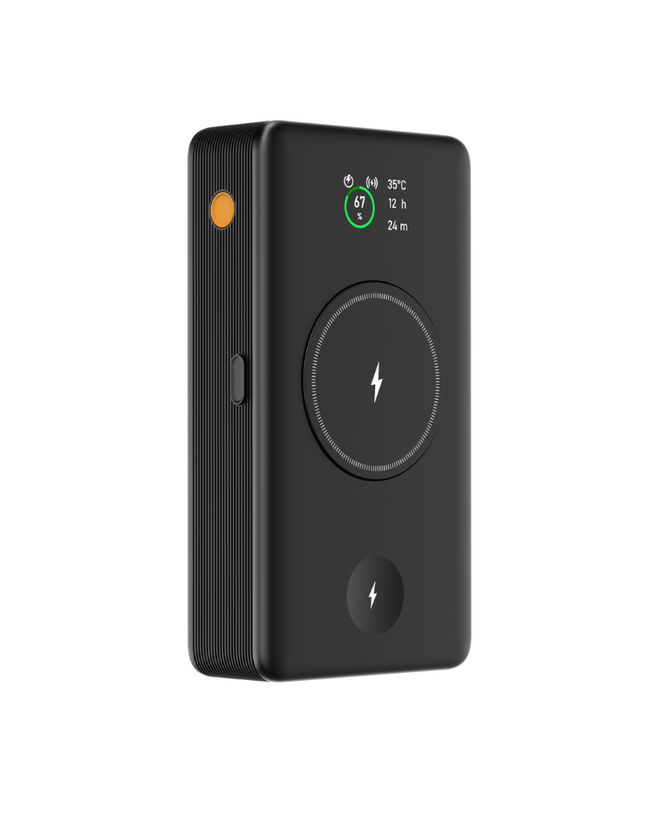
A screen instead of blink codes: exact %, live wattage and temperature, so you always know what it is doing. 100W, MagSafe.
$199 $169Save $30
★★★★★ 4.95 from 22 reviews · Free shipping over $99 · 30-day returns
First: what the blinking is actually telling you
The indicator light is not random. Manufacturers use blink patterns as a status code. The number of LEDs, the speed of the flash, and the colour each mean something specific. The single most useful thing you can do is match your pattern before you start swapping parts.
The good news: a blinking pack is rarely dead. In the large majority of cases it is a cable, a weak charger, or temperature, and all three take seconds to rule out.
This is the general chart our support team uses when someone writes in with a blinking pack. It covers the patterns common across most brands.
| Blink pattern | What it usually means | First thing to try |
|---|---|---|
| All LEDs flashing together, fast | Short circuit or safety cutoff triggered | Unplug everything, reset the pack, try one device |
| One LED blinking slowly | Charging normally, just low | Nothing. This is normal. Let it fill |
| LEDs cycling up then off, repeating | Input too weak to hold a charge | Switch to an 18W or higher wall charger |
| Red or orange blink | Temperature fault (too hot or cold) | Move to room temperature, wait 15 minutes |
| Blinks a few times, then stops | Cells too depleted to start | Charge 30 minutes on a wall charger, then recheck |
| No light at all | Fully depleted or a dead cell | Charge 30 minutes on a wall charger, then check |
Why a screen beats a blink code. One blinking light can mean five different things, and you cannot tell heat apart from a bad cable by looking at it. A power bank with an OLED display shows the actual charge percentage, live wattage and temperature, so you are reading a status instead of decoding one.
Before you start: is the pack actually dead?
A power bank is at end of life when it holds well under about 80 percent of its original capacity, needs recharging far more often than it used to, takes much longer to refill than when new, swells or feels warm at rest, or won’t hold a charge even after a full reset. Most quality lithium power banks last around 300 to 500 full charge cycles, roughly 2 to 3 years of normal use, though higher grade cells last longer. If yours is swollen, stop using it immediately, do not charge it, and take it to a battery or electronic waste recycling point (never a household bin). In the US, use a Call2Recycle location or the battery collection bins at retailers like Best Buy, Staples, or Home Depot; in Australia, use a B-cycle collection point.
If none of that describes your pack, skip the block below and work through the seven fixes in order. If it does, no amount of cable swapping will help, and this is what we would replace it with.
If that described your pack

Flash Pro Plus — 25,000mAh
The straight swap for most people. The screen shows exact percentage, live wattage and temperature, so next time you will see in one second whether it is charging, throttling or too hot. 100W in, MagSafe on top.
$199 $169 View

PocketPower Pro — the smaller one
The same honest readout in something that actually fits a jacket pocket. Several full phone charges, and you always know exactly how much is left before you leave the house.
$99 View
Also charge a laptop? Flash Pro Ultra runs a MacBook Pro at full 140W in and out, and at 90.75Wh still clears the 100Wh airline limit. $249.
The 7 fixes, in the order that solves the most cases
1. Swap the cable, and test it (don’t trust it)
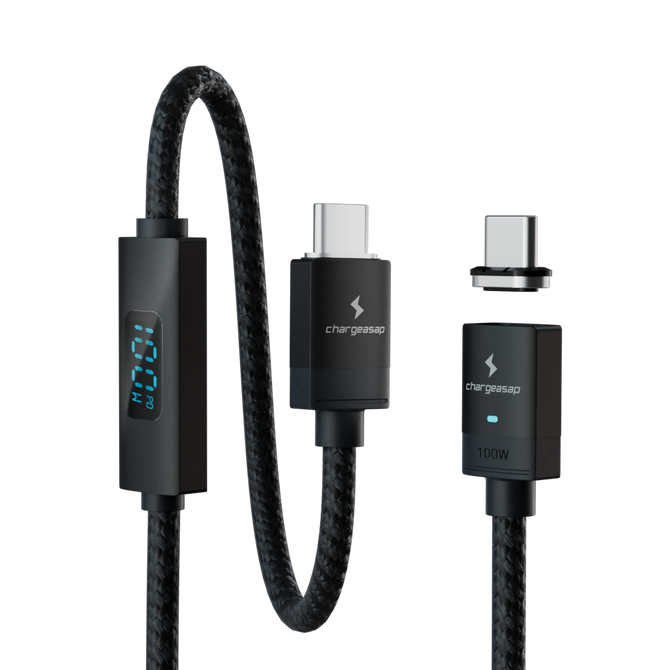
The most common culprit by far is a worn cable or one that can only trickle power. A cable can carry enough current to light the LEDs but not enough to actually charge. Try a different USB-C cable you know works. In our testing, roughly 8 out of 10 “dead power bank” returns we inspect are simply a failed cable.
2. Use a proper wall charger, not a laptop or car USB port
Many power banks need a minimum input to begin charging. A weak 5W port will make the LEDs blink without ever topping up the cells. Use a USB-C PD wall charger rated at least 18 to 20W just to charge at all. To recharge fast, match the charger to your power bank’s maximum input rating:
| Power bank | Max input | Charger for full speed recharge |
|---|---|---|
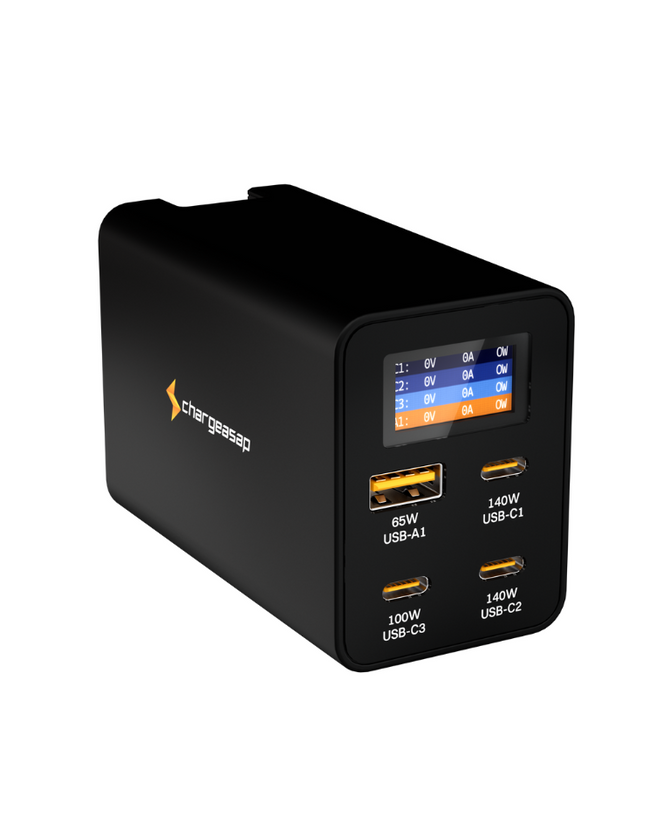
| Flash Pro Ultra | 140W | 140W or higher GaN charger (e.g. our Zeus 280W) |
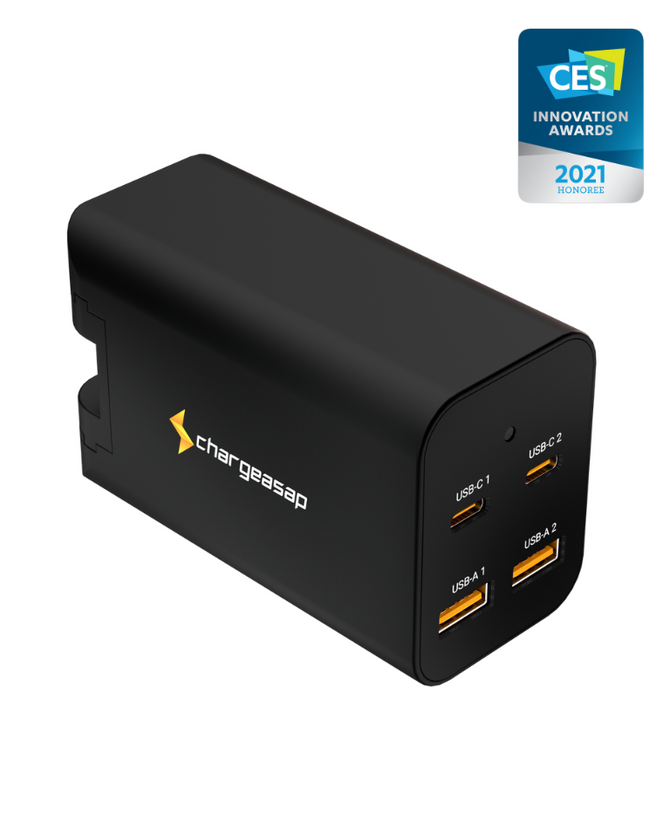
| Flash Pro Plus | 100W | 100W GaN charger (e.g. our 100W or 200W Omega) |
| Pocket Power Pro | 18W | Any 20W or higher USB-C wall charger |
Feeding a large capacity pack from a small charger is the usual reason a recharge “takes all night”. It’s charging, just slowly. For example, our 25,000mAh Flash Pro Ultra refills from empty in just 70 minutes with our Zeus 280W GaN Charger.
3. Let it reach room temperature
Lithium cells refuse to charge when too cold or too hot. It’s a safety feature built into the pack. If the pack has been in a car, a bag in the sun, or a cold room, leave it at room temperature for 15 to 20 minutes before trying again. The catch with a blinking pack is you can’t tell heat apart from any other fault. The light looks the same.
4. Force it out of protection mode (wake the pack)
A deeply drained pack can enter sleep or protection mode and ignore the charger. To wake most packs, plug into a wall charger and leave it a full 30 minutes before deciding it’s dead; many models also respond to a single press of the power button.
5. Clean and inspect the ports
Lint and debris in a USB-C port stop the connector seating fully. Look inside with a light; gently clear it with a wooden toothpick or a short burst of compressed air. Check for bent pins or corrosion.
6. Try charging and discharging separately
Confirm whether the fault is input or output. Plug the pack into a wall charger (input test), then separately try charging a phone from it (output test). If it powers a phone but won’t take a charge itself, the input port or charging circuit is the problem. If it takes input but won’t power a phone, the issue is on the output side or a protection lockout.
7. Do a full reset or recalibration
Chargeasap power banks can be reset by pressing and holding the power button for 15 seconds to restore normal operation.
Still blinking after all of the above?
Then it’s most likely the cells, not the cable or the port. Lithium cells are good for roughly 300–500 full cycles — about two to three years of regular use — and once they go, no reset brings them back.
Tried all seven and still blinking?
Flash Pro Plus — 25,000mAh
The straight swap for most people. The screen shows exact percentage, live wattage and temperature, so next time you will see in one second whether it is charging, throttling or too hot. 100W in, MagSafe on top.
$199 $169 View
PocketPower Pro — the smaller one
The same honest readout in something that actually fits a jacket pocket. Several full phone charges, and you always know exactly how much is left before you leave the house.
$99 View
Also charge a laptop? Flash Pro Ultra runs a MacBook Pro at full 140W in and out, and at 90.75Wh still clears the 100Wh airline limit. $249.
Every Chargeasap power bank has an OLED screen showing exact charge percentage and live wattage, so you always know precisely what it’s doing and whether anything’s wrong. They’re built with premium cells and components for a longer usable lifespan, backed by a 1 year warranty.
Shop the Chargeasap Power Bank Collection
Related guides
- How long do power banks last?
- Is it safe to charge a power bank overnight?
- Can a power bank damage your battery?
Gabby is Cofounder at Chargeasap, an Australian charging hardware company that has run 14 crowdfunding campaigns on Kickstarter and Indiegogo and shipped to more than 108,000 customers since 2016. She has personally tested every power bank in this guide.
FAQ
Why is my power bank blinking but not charging?
It’s signalling a fault, most often a failed cable, an input charger that’s too weak, cells that are too hot or cold, or a triggered safety cutoff. Match your blink pattern to the chart above to find the exact cause.
How do I reset a power bank that won’t charge?
On a Chargeasap power bank, press and hold the power button for 15 seconds to reset it. Otherwise, leave it plugged into a wall charger for at least 30 minutes. If it still won’t charge after that, it has likely failed.
How do I know if my power bank is dead?
Clear signs are swelling, holding far below its rated capacity, or refusing to hold a charge even after a full reset. A swollen pack should be recycled immediately, not used.
What wattage charger do I need to charge my power bank?
At least 18 to 20W from a wall outlet. Weak 5W USB ports often make the LEDs blink without charging the cells.