Updated August 2026. Written by Vinson, Cofounder at Chargeasap, with 10 years building and testing portable chargers.
Quick answer: Yes, it is safe to leave a modern power bank charging overnight. Quality power banks from reputable brands include overcharge protection circuits that stop charging automatically once the battery reaches 100%. The risk is not zero, but it is very low when you use a quality device and follow basic precautions. Read on for the full picture.
Pack swollen, running hot or a few years old?

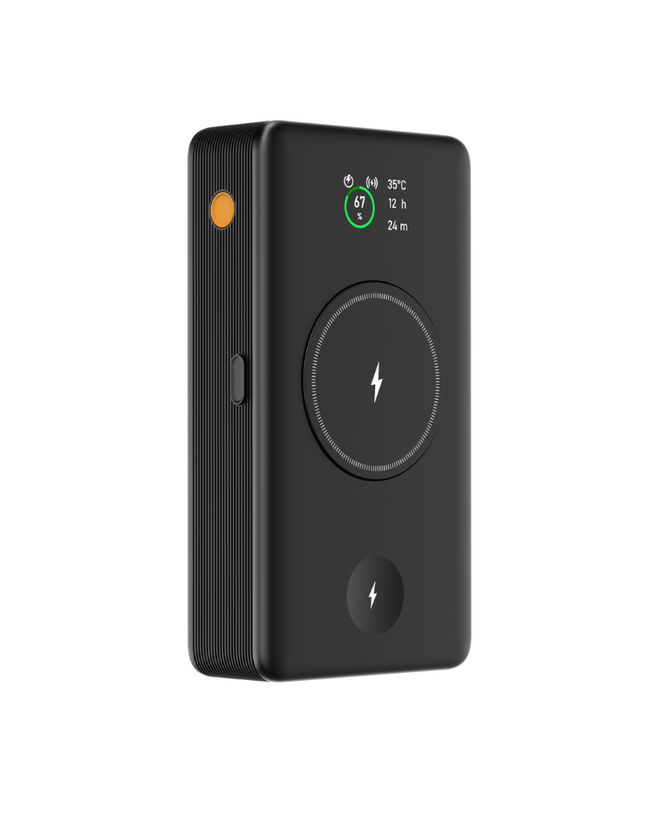
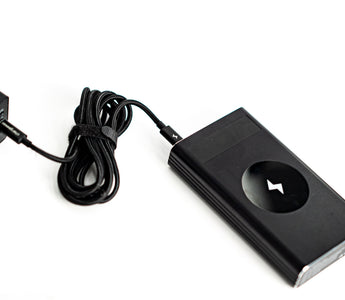
Shows live temperature and charge % on an OLED screen, so you can see how it did overnight. 100W, MagSafe.
$199 $169Save $30
★★★★★ 4.95 from 22 reviews · Free shipping over $99 · 30-day returns
Want something pocket-sized? PocketPower Pro, $99
Why Overnight Charging Is Generally Safe
Every power bank sold by a reputable brand includes a Battery Management System (BMS). This is a small circuit board inside the power bank that monitors the battery cells in real time. When the battery reaches full charge, the BMS cuts off the current automatically. The power bank stops charging even if it remains plugged in.
This is the same technology used in your iPhone, MacBook, and any other quality rechargeable device. The lithium cells themselves cannot tell the difference between overnight and a two-hour charge. What matters is whether the BMS is working correctly and whether the charger you are using is delivering a stable, correct voltage.
The UL (Underwriters Laboratories) safety standard for lithium batteries requires overcharge protection as a baseline requirement. Any power bank that carries UL certification has been independently tested to confirm this protection works.
The Real Risk: Heat, Not Overcharging
The more meaningful risk with overnight charging is not overcharging. It is heat. Lithium batteries degrade faster when they charge at elevated temperatures. If your power bank is sitting on a soft surface like a pillow or blanket while charging, it cannot dissipate heat efficiently. Over time, this accelerates battery degradation and, in rare cases with low-quality cells, can create a safety hazard.
The simple rule: charge your power bank on a hard, flat surface with airflow around it. A bedside table or desk is fine. Under a pillow or inside a bag is not.
What good overnight protection actually looks like
Whatever brand you own, there are four things worth having, and you can check your own pack against them: overcharge protection, over-discharge protection, short circuit protection, and temperature monitoring. Any power bank from a known brand with published certifications will have the first three. The fourth is where they differ — and more to the point, whether the pack will tell you what it found.
That matters more than it sounds. Heat is the real risk of overnight charging, and on most power banks there is no way to know how hot the cells actually got. You are judging a sealed plastic brick by how warm it feels in the morning. A temperature readout turns that guess into a number. Our Flash Pro Plus and Flash Pro Ultra put live temperature and battery percentage on an OLED display for exactly that reason.
One of the most common questions our support team receives is "why is my power bank warm after charging overnight?" The answer is that a small amount of residual heat after a full charge cycle is completely normal and expected. The BMS has been working all night managing the charge. What you should not see is the power bank still hot hours after it reached 100%.
So, practically: if your power bank is from a brand you have heard of, is not swollen, and is not still hot hours after it finished charging, it is fine. Put it on the bedside table tonight and stop thinking about it. You do not need to buy anything.
If you would rather see the temperature than guess

Flash Pro Plus — 25,000mAh
All four protections, plus an OLED showing live temperature and percentage — so the morning question answers itself. 100W in, MagSafe on top.
$199 $169 View

PocketPower Pro — the smaller one
The same protections and the same readout in something that fits a jacket pocket. Fills overnight from any 20W plug you already own.
$99 View
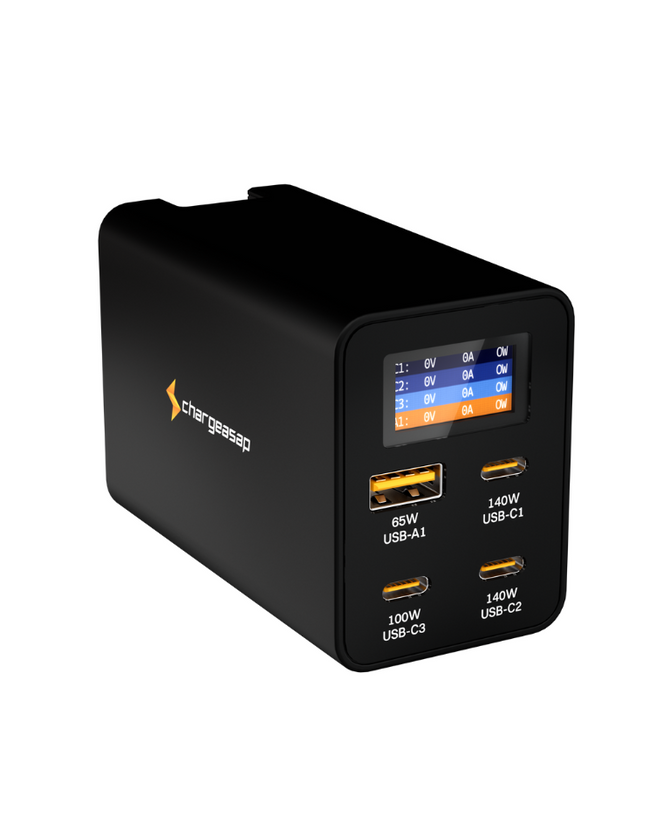
Also charge a laptop? Flash Pro Ultra refills its own 25,000mAh in about 70 minutes at 140W, so it rarely needs the whole night. $249.
Signs Your Power Bank Should Not Be Left Charging Overnight
Most power banks are safe to charge overnight. The exceptions are power banks showing these warning signs:
- Swelling or bulging: A swollen power bank has a failing cell. Stop using it immediately and take it to a battery recycling point. Do not charge it.
- Gets very hot during normal charging: Warm is normal. Hot to the touch is not. If the power bank is uncomfortable to hold while charging, the thermal management is failing.
- Takes much longer to charge than it used to: This indicates cell degradation. The BMS may not be cutting off at the correct point.
- No brand name or certification markings: Unbranded power banks from unknown manufacturers frequently skip the BMS to reduce cost. These are the ones that cause problems.
Age is the common thread on the first three. If yours is a few years old and running warmer than it used to, that is the cells ageing rather than anything you are doing wrong — and it is the point at which leaving it unattended overnight stops being a good idea. If none of the four apply to your pack, you are in the clear.
Does Charging Overnight Reduce Battery Life?
Slightly, over a long period. Lithium batteries prefer to stay between 20% and 80% charge for maximum longevity. Keeping them at 100% for extended periods does cause minor degradation over hundreds of cycles. However, the practical impact on a quality power bank used normally is minimal. You are unlikely to notice a difference in capacity for the first two to three years of use.
If you want to maximise the lifespan of your power bank, unplug it once it reaches full charge. But if that is not practical, leaving it plugged in overnight is not going to meaningfully shorten its life with a quality device.
The bottom line: Charge your power bank overnight on a hard surface, use a quality charger, and buy from a brand that publishes its safety certifications. If your power bank is swollen, hot to the touch, or from an unknown brand with no certifications, do not charge it unattended.
If yours is swollen, running hot or getting old
Flash Pro Plus — 25,000mAh
All four protections, plus an OLED showing live temperature and percentage — so the morning question answers itself. 100W in, MagSafe on top.
$199 $169 View
PocketPower Pro — the smaller one
The same protections and the same readout in something that fits a jacket pocket. Fills overnight from any 20W plug you already own.
$99 View
Also charge a laptop? Flash Pro Ultra refills its own 25,000mAh in about 70 minutes at 140W, so it rarely needs the whole night. $249.
Shop Chargeasap power banks with built-in overcharge protection here.
Vinson is Cofounder at Chargeasap, an Australian charging hardware company that has run 14 crowdfunding campaigns on Kickstarter and Indiegogo and shipped to more than 108,000 customers since 2016. He has personally tested every power bank in this guide.
FAQ
Is it safe to leave a power bank charging overnight?
Yes, for quality power banks from reputable brands. These include a Battery Management System (BMS) that stops charging automatically when the battery reaches 100%. The main precaution is to charge on a hard, flat surface to allow heat to dissipate, not on soft surfaces like pillows or blankets.
Can a power bank explode if left charging overnight?
This is extremely rare with quality power banks that have proper overcharge protection and use certified lithium cells. The risk is higher with unbranded or very cheap power banks that may not include proper BMS circuits. If your power bank is swollen, cracked, or from an unknown brand, do not charge it unattended.
Does leaving a power bank plugged in overnight damage the battery?
Marginally, over a long period. Lithium batteries degrade slightly faster when kept at 100% charge for extended periods. However, with a quality power bank used normally, the practical impact is minimal and unlikely to be noticeable for the first two to three years of use.
How long does it take to fully charge a power bank overnight?
It depends on the power bank's capacity and the charger you use. A 25,000mAh power bank like the Chargeasap Flash Pro Ultra takes about 70 minutes with a 140W charger, or 3-4 hours with a standard 20W phone charger. Most power banks will be fully charged well before morning regardless of when you plug them in.