
In the world of technology, the ports and cables we use to connect and charge our devices are often an afterthought. However, the transition from the traditional USB-A standard to the newer, more versatile USB-C standard is a significant development that has a major impact on how we interact with our tech. This guide will explore the key differences between USB-C and USB-A, and explain why USB-C is the future of connectivity.
A Tale of Two Connectors: The Evolution of USB
For decades, the rectangular USB-A connector has been the ubiquitous standard for connecting everything from keyboards and mice to external hard drives and printers. It's a reliable workhorse, but it has its limitations. As our devices have become more powerful and more compact, the need for a more advanced and versatile connector has become apparent.
Enter USB-C. With its smaller, reversible connector and a host of advanced features, USB-C is quickly becoming the new standard for charging and data transfer. But what exactly makes it so much better than its predecessor?
USB-C vs. USB-A: A Head-to-Head Comparison
The differences between USB-C and USB-A go far beyond the shape of the connector. Here's a breakdown of the key advantages that USB-C offers:
|
Feature
|
USB-C
|
USB-A
|
|
Connector Shape
|
Small, oval, and reversible
|
Rectangular and unidirectional
|
|
Power Delivery
|
Up to 240W with USB Power Delivery (PD)
|
Up to 2.5W (standard)
|
|
Data Transfer Speed
|
Up to 40Gbps with Thunderbolt 4
|
Up to 5Gbps with USB 3.2 Gen 1
|
|
Versatility
|
Can transmit data, video, and power over a single cable
|
Primarily used for data transfer and low-power charging
|
|
Size
|
Smaller and more compact
|
Larger and bulkier
|
As you can see, USB-C is superior to USB-A in almost every way. Its reversible connector is more user-friendly, its power delivery capabilities are vastly superior, and its data transfer speeds are in a different league altogether.
The Power of USB Power Delivery (PD)
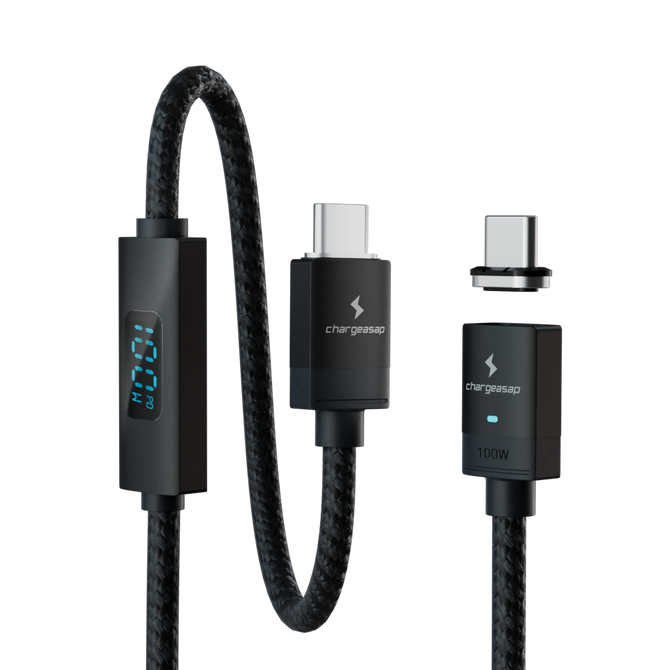
One of the most significant advantages of USB-C is its support for USB Power Delivery (PD). This technology allows for much higher power levels to be transmitted through a USB-C cable, enabling you to charge high-power devices like laptops and tablets at full speed.
With USB PD, a single USB-C cable can deliver up to 240W of power, which is more than enough to charge even the most demanding laptops. This is a massive leap forward from the 2.5W of power that a standard USB-A port can provide.
The Chargeasap Zeus 280W: Unleashing the Full Potential of USB-C
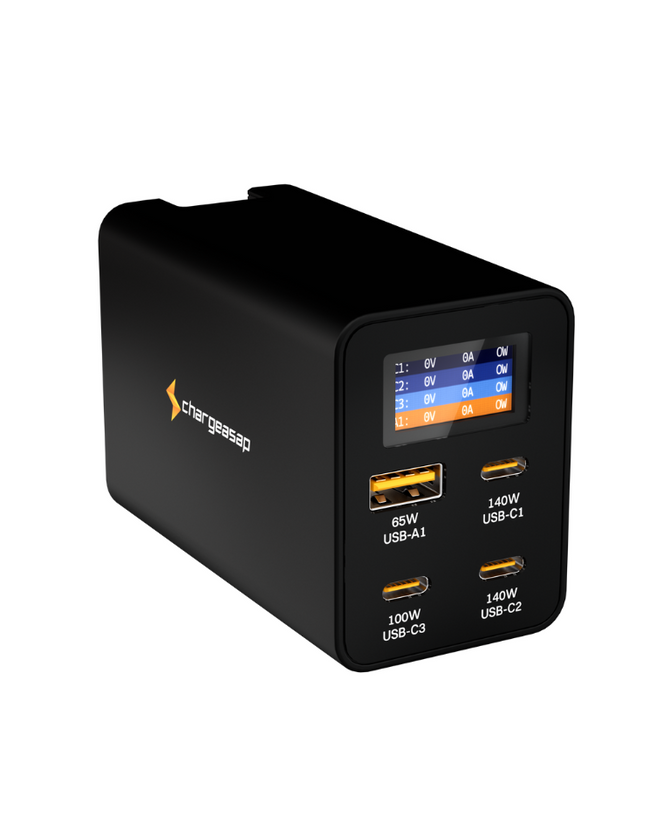
At Chargeasap, we believe in harnessing the full potential of the latest technology to create products that are both powerful and convenient. That's why we designed the Zeus 280W GaN Charger to be the ultimate USB-C charging solution.
The Zeus 280W features three powerful USB-C ports, including two that can deliver up to 140W of power each. This means you can fast-charge two MacBook Pros simultaneously, a feat that is simply not possible with many other chargers on the market. We've also included a high-power 65W USB-A port for your legacy devices, so you can be sure that all of your tech is covered.
By embracing the power and versatility of USB-C, the Zeus 280W offers a glimpse into the future of charging: a future where a single, compact charger can power all of your devices, from your laptop to your smartphone and everything in between.