
Rethinking “Fastest iPhone Charger” Claims at Airports
Airport charging can feel stressful. Your iPhone battery drops into the red, your boarding time gets closer, and bright signs promise the “fastest iPhone charger” at kiosks and charging stations. In that moment, it is easy to swipe a card, plug in anywhere, and hope for the best.
But those “ultra-fast” labels do not always match what actually happens on your screen. Many travelers end up paying extra, fighting for crowded outlets, and still walk onto the plane with only a few extra percent of battery. In this post, we will break down what fast charging really means, why airport options often disappoint, and how bringing your own setup gives you more power and less stress.
At Chargeasap, we design power gear in Australia for people who want to stay charged at home, at work, and while traveling. So we care a lot about what “fastest” really looks like in real life, not just on a sign.
What “Fastest iPhone Charger” Really Means
When people say “fastest iPhone charger”, they usually just mean “fills my battery quickly”. But there is real tech behind that simple idea.
Recent iPhones support fast charging with USB-C PD, short for Power Delivery. To actually get fast speeds, a few things need to line up:
- A charger that can give at least 20W
- A cable that supports fast charging, like USB-C to Lightning or USB-C to USB-C for newer models
- An iPhone that supports PD fast charging
If any piece is weak, you do not get the full speed. A cheap cable can slow things down even if the charger is strong. A weak charger can do the same, even with a good cable. That is why the “fastest iPhone charger” is never just about one part.
Battery level matters too. Fast charging works best when your phone is low, usually under about 50 percent. As the battery fills, your iPhone slows the charge to keep things safe and cool. So a charger that feels blazing fast from 10 to 40 percent may feel normal from 80 to 100 percent.
Then we have the marketing words at airports. Signs like “turbo charge”, “hyper fast”, or “10x faster” almost never explain:
- The actual wattage of the port
- Whether it supports USB-C PD
- If power is shared across multiple sockets
If a station has one power supply and many USB ports, all those phones and tablets are sharing the same pool. Your iPhone might only get a small slice, no matter how “fast” the sign claims it is.
The Hidden Downsides of Airport Charging Stations
Public charging can be helpful in a pinch, but it has some real downsides that most people do not see at first.
First, many airport USB ports are low power. They might only deliver a small amount of wattage, sometimes even less than the charger that came with your phone. When that power is shared across several ports, charging slows down even more. What is called the “fastest iPhone charger” at the gate might barely move your battery during boarding.
There are also safety and security questions. When you plug your phone into a public USB port, you are not just getting power, you are also opening a data connection in some cases. That is where concerns about “juice jacking” come in, where a bad port could try to access data on your phone. On top of that, old or damaged stations can send unstable power, which is not great for your battery over time.
Then there is plain convenience. Airport charging usually means:
- Standing or sitting on the floor next to a crowded pillar
- Guarding your phone so it is not left alone
- Unplugging early because boarding starts
You can spend 30 minutes trying to get a spot, then another 20 minutes charging, and walk away with just a small bump in battery. It is better than nothing, but it is rarely the fast, calm top-up those signs promise.
Why Your Own Charger Beats Airport “Fast” Options
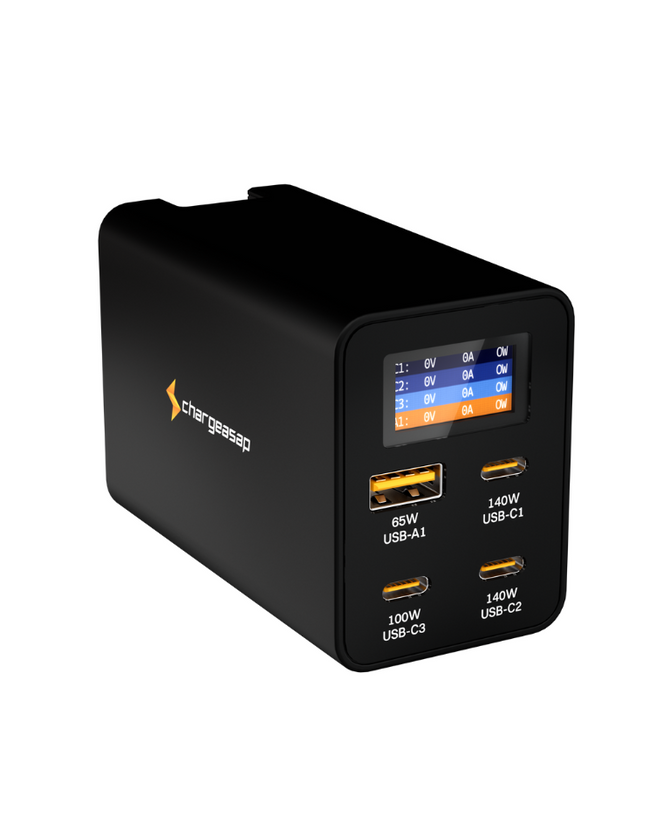
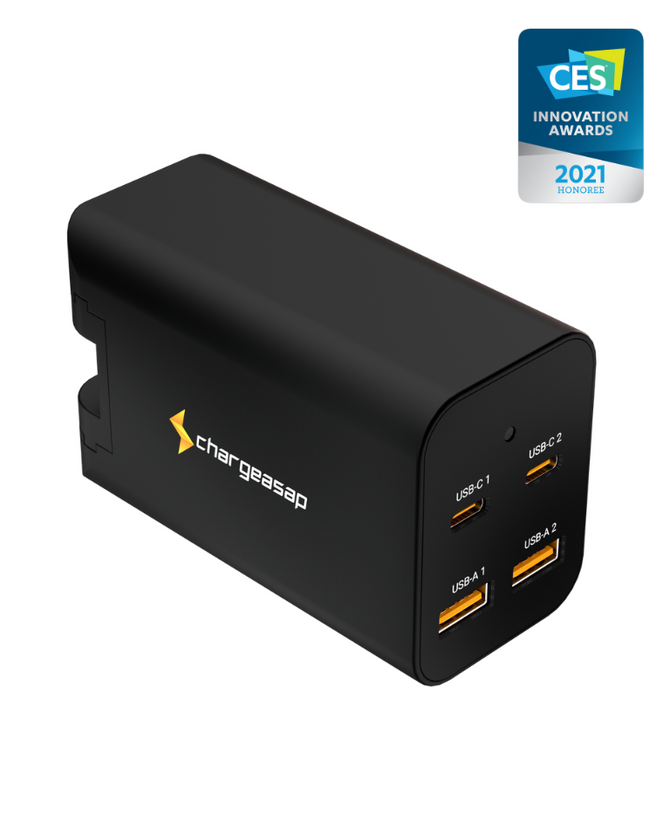
Bringing your own charger changes the whole story. A compact GaN wall charger with the right wattage and USB-C PD support often beats generic airport outlets by a wide margin.
GaN, short for gallium nitride, lets chargers be smaller while still delivering strong power. That means you can have a tiny charger in your pocket that gives your iPhone all the wattage it can safely use. In real life, that feels like:
- Faster top ups during short breaks
- Less heat, thanks to better power efficiency
- More consistent performance across different airports and hotels
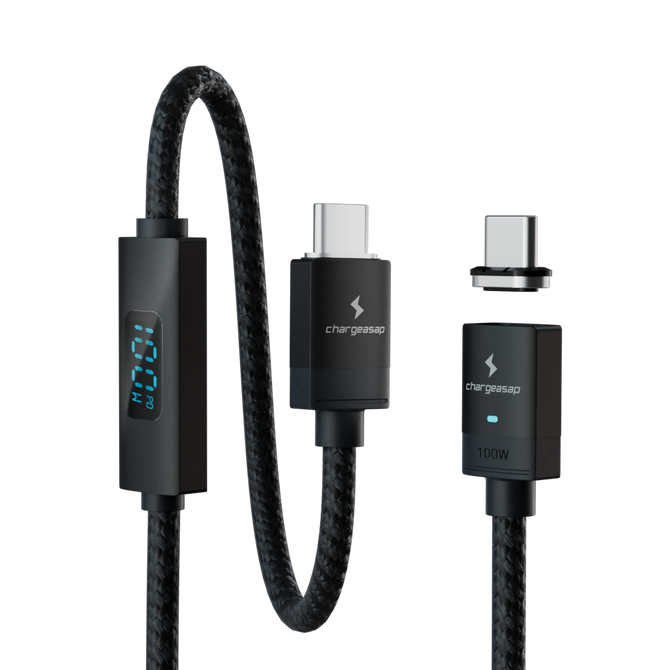
Reliability matters just as much as speed. When you use a charger and cable you trust, there are fewer surprises. Good magnetic or tangle-free cables click into place easily, stay connected in awkward spots, and are built for repeated travel. That helps avoid slow, flaky charging where the cable wiggles loose every few minutes.
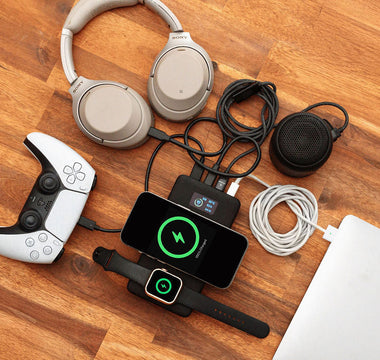
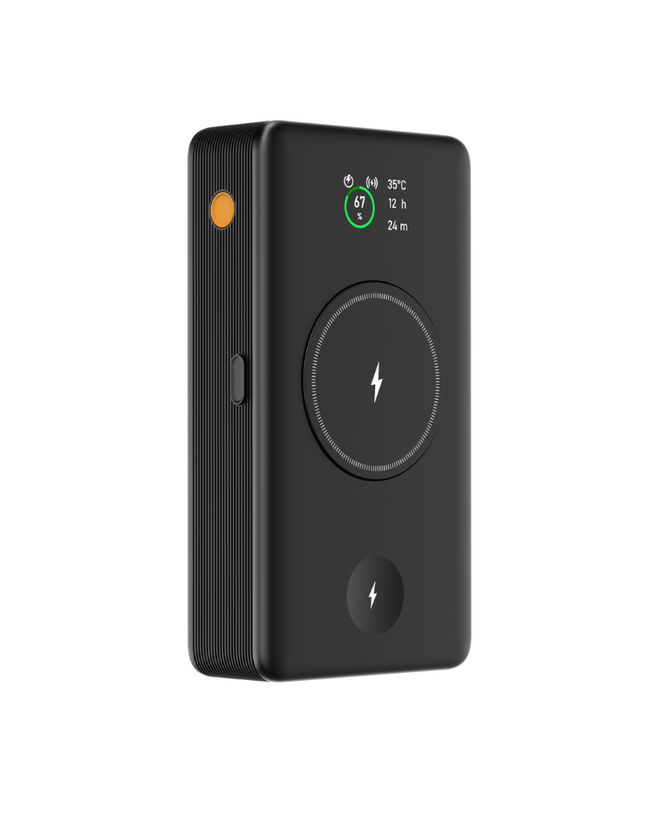
For travel, the advantage keeps growing. A small GaN charger with multiple ports lets you charge your iPhone, tablet, and maybe even a laptop from one wall outlet. Add a high-capacity power bank, and now you can:
- Charge during the flight
- Top up in lounges or on trains
- Keep your phone alive during long customs lines
At Chargeasap, a lot of our design choices come from these exact travel headaches, whether you are leaving Sydney on a long-haul flight or taking a short hop for a weekend trip.
Smart Travel Strategies for Real Fast Charging
A little planning before you head to the airport can make a big difference. You do not need a huge tech bag, just a simple “power kit” that you keep ready.
Here is a quick pre-trip checklist:
- Confirm that your iPhone supports fast charging with USB-C PD
- Pack a 20W or higher GaN charger with at least one USB-C port
- Bring a quality USB-C to Lightning or USB-C to USB-C cable
- Add a TSA-compliant power bank for charging on the go
At the airport, aim to plug into AC outlets with your own charger instead of public USB ports. AC power plus your GaN charger gives you the full speed your phone can handle, and you skip the potential data risks of direct USB ports.
Some simple habits help too:
- Top up during quiet moments, like at the cafe, not just at boarding time
- Use layovers to recharge your phone and power bank
- Keep your cable and charger in an easy-reach pocket in your bag
Around spring break, early summer planning, and other busy travel seasons, airports can feel even more crowded. When flights are longer and connections are tighter, having steady power matters for maps, translation apps, boarding passes, and ride pickups when you land.
Take Control of Your Power, Not the Airport Hype
In the end, the true fastest iPhone charger is almost never the one sitting under a glowing airport sign. It is the one you bring with you, with proper wattage, efficient GaN tech, and a cable you trust. That combo gives you real speed, not just marketing words.
At Chargeasap, we want travelers to feel calm about power, not anxious. A small travel kit with a compact GaN charger, magnetic or tangle-free cables, and a solid power bank can keep you independent from random airport stations. That means fewer last-minute scrambles for an outlet, and more time enjoying the trip, boarding your flight with a charged iPhone and a clear head.
Power Up Your iPhone With Faster, Smarter Charging
Upgrade your daily charging routine with Chargeasap and experience how much time you save when your devices power up at top speed. Our compact 35W GaN technology is engineered to deliver safe, efficient performance tailored to your iPhone. See for yourself how our fastest iPhone charger can keep you powered through work, travel, and everything in between. Take the next step today and make slow charging a thing of the past.